Hora Decima
The hour the light turned gold.
Discover the tenth hour ↓What is the tenth hour?
In ancient Rome, daylight was divided into twelve hours, counted from sunrise. Hora decima was the tenth: a late part of the day whose duration changed with the seasons. This is the hour from which our name begins.
- I
- II
- III
- IV
- V
- VI
- VII
- VIII
- IX
- X
- XI
- XII
Not a fixed hour on a modern clock, but a place in the passage of daylight. For us, it evokes the lowering sun and the approach of evening.
When time followed the sun
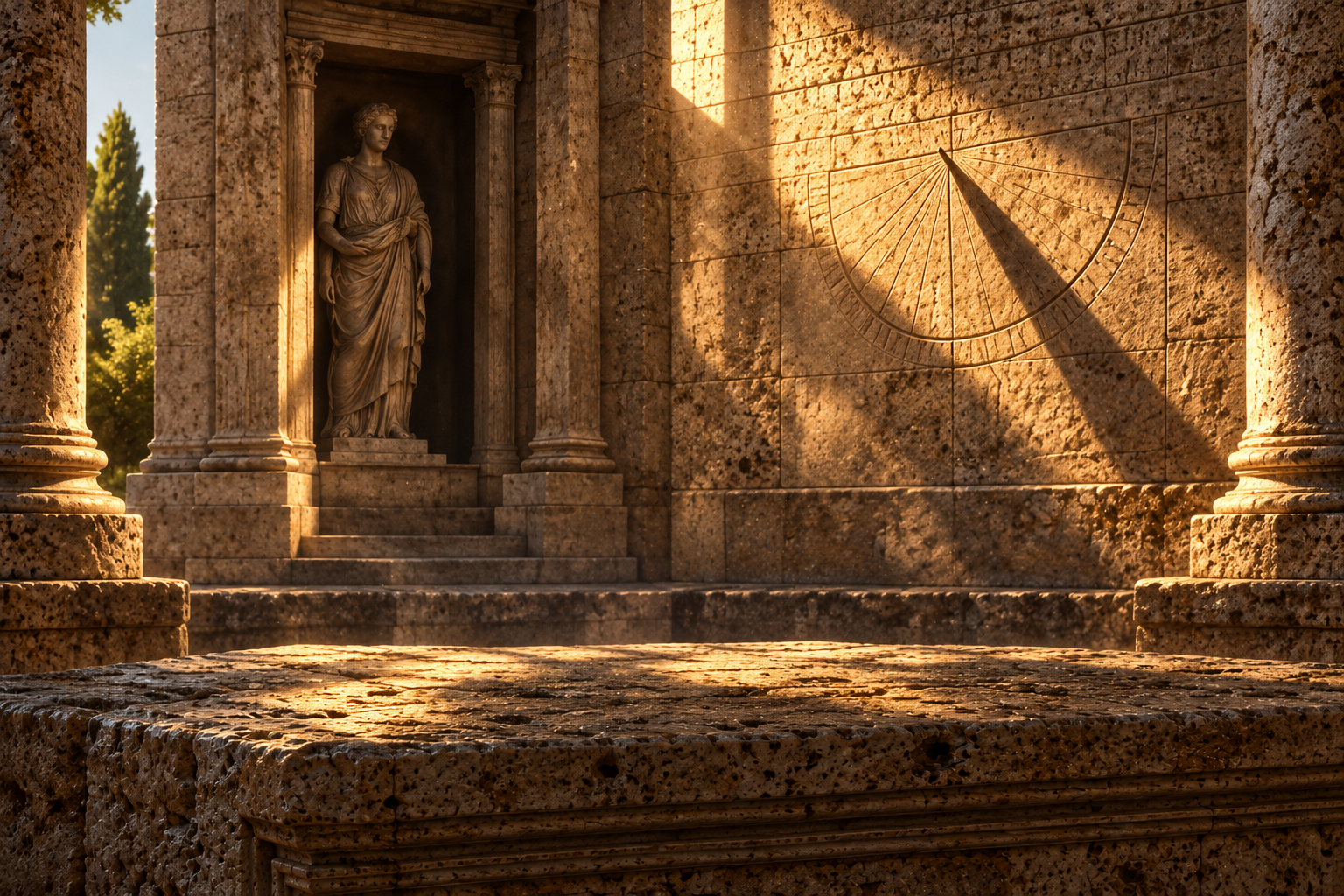
A summer hour was longer than a winter hour. With daylight divided into twelve parts, time expanded and contracted with the seasons. The same numbered hour could hold a different span of minutes.
On a sundial, the shadow of a gnomon traced the passing day. Light, stone and shadow made time visible. HORA DECIMA begins with that ancient relationship: a day read through the movement of the sun.
“The tenth hour, Euphemus, is the hour for my little books.”
Martial
Epigrams · IV.8, line 7HORA DECIMA translation from the Latin · Martial names the tenth hour as the time for his poems.